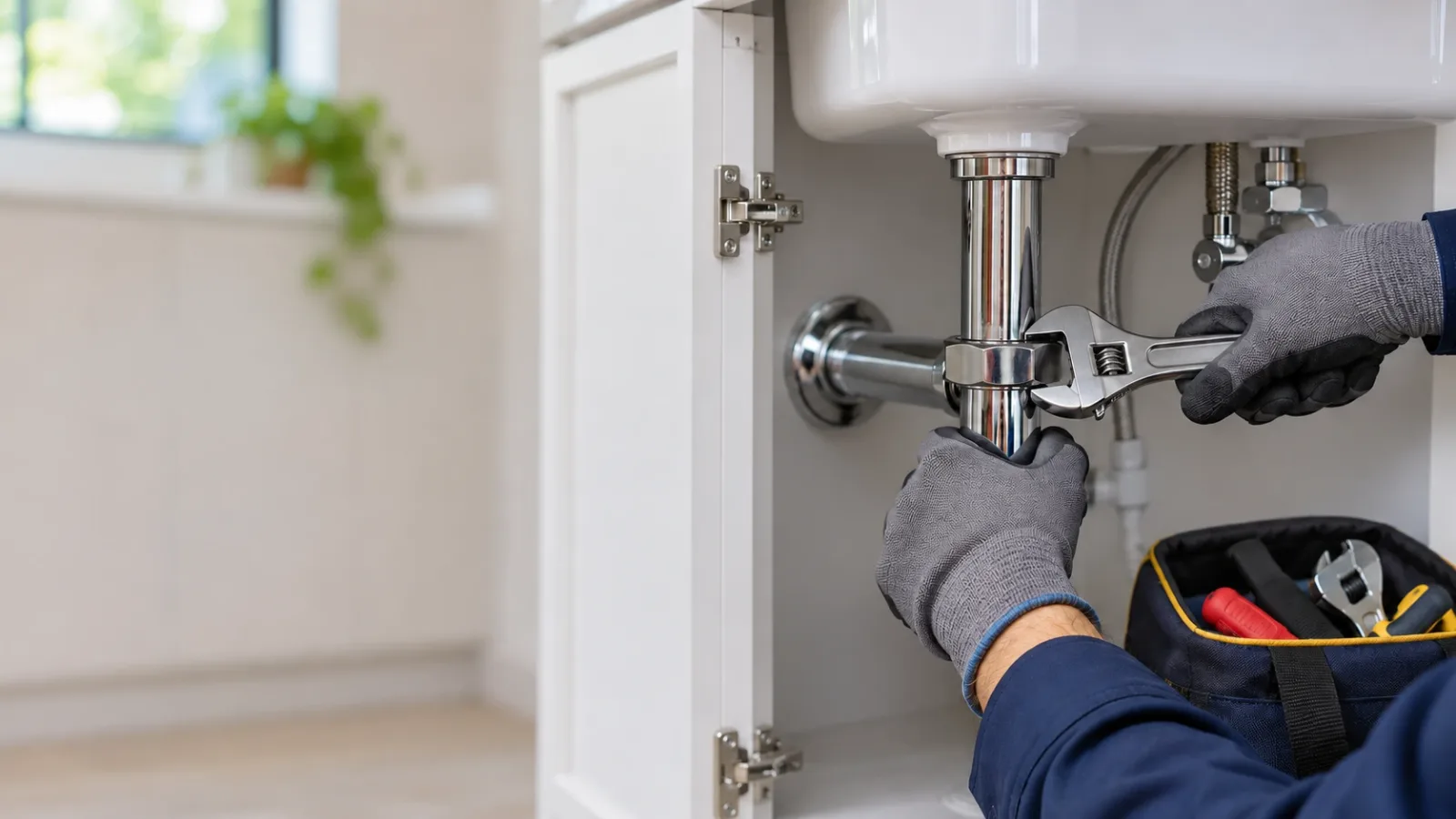
Open 24 hours · Serving Joplin, MO
Drain Cleaning in Joplin, MO
Clogged sinks, tubs, toilets and main lines cleared properly — with the cause explained, not just pushed further down the pipe.
- In business since 2024
- Local Joplin address
- Open 24 hours
- Quote before work starts
Quick answer
If you need drain cleaning in Joplin, MO, Plumber Joplin MO clears clogged sinks, tubs, showers, toilets and main sewer lines, 24 hours a day. We find where the clog is, choose the right tool, either a drain cable or hydro-jetting, and quote the job before starting. Call (844) 434-1552.
What are the signs you need drain cleaning?
You need drain cleaning when water drains slowly or not at all, drains gurgle, bad smells come up from sinks or floor drains, or water backs up into a tub or shower. One slow drain is usually a local clog. Several at once usually means the main line is blocked.
Signs of a local clog
- One sink, tub or shower drains slowly while everything else is fine
- A toilet that needs plunging regularly
- Standing water in a shower pan after a short shower
- A sour smell from one particular drain
Signs of a main-line problem
- Several fixtures slow at the same time, especially on the lowest floor
- Water rising in the tub or shower when you flush a toilet
- Gurgling in a toilet when the washing machine drains
- Water or sewage appearing at a basement floor drain
- Sewage odor indoors or a damp, smelly patch in the yard
Main-line symptoms need prompt attention. If wastewater is coming into the house, stop using water and treat it as an emergency. If roots or broken pipe are the cause, the fix may involve sewer line repair.
What causes clogged drains?
Clogs come from what goes down the drain and from the condition of the pipe. In kitchens it is usually grease, food scraps and coffee grounds. In bathrooms it is hair, soap scum and toothpaste. In toilets it is wipes and too much paper. Main lines also clog from tree roots and sagging pipe.
Kitchen drains
Cooking grease is liquid when it goes down and solid once it cools. It coats the pipe and traps food particles until the drain narrows to nothing. A garbage disposal helps, but it does not make grease, fibrous peels or coffee grounds safe. See our kitchen plumbing page for disposal problems.
Bathroom drains
Hair binds with soap scum to form a mat that catches everything else. Tub and shower drains are the most common bathroom clogs, followed by bathroom sinks.
Toilets
“Flushable” wipes, paper towels, cotton products and children's toys are frequent culprits. Low-flow toilets with weak flushes can also clog more easily.
Main sewer lines
Tree roots seek out moisture and grow into joints and cracks. Older pipe can shift, settle or collapse. Grease and wipes from the whole house collect where the pipe sags. These clogs come back until the cause is dealt with.
Drain backing up? Stop running water and call.
Call (844) 434-1552Our drain cleaning process
- Ask and listen. Which drains are slow, since when, and what has been tried already. The pattern tells us whether we are looking at a local clog or the main line.
- Find the clog. We access the drain through the fixture, a trap or a cleanout. For recurring or main-line problems, a sewer camera shows exactly where the blockage is and what it is made of.
- Choose the method and quote. We explain whether a drain cable or hydro-jetting is the better fit, and quote before starting.
- Clear the line. The clog is broken up and flushed through, not just pushed further down the pipe.
- Test the flow. We run water through the cleared drain and connected fixtures to confirm it drains freely.
- Explain what we found. If the camera showed roots, cracks or a sag, we tell you and show you, so you can decide whether a repair is worth it.
Drain cleaning vs hydro-jetting: what is the difference?
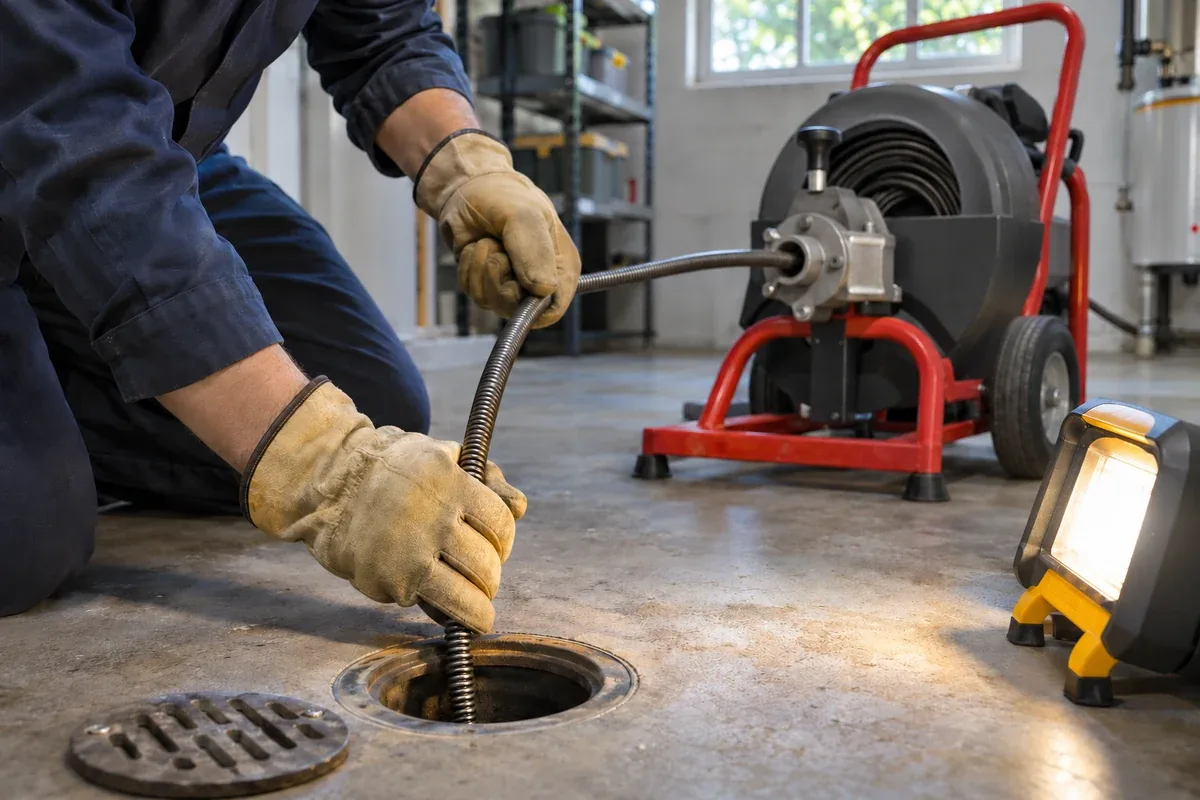
Standard drain cleaning uses a motorised cable, or snake, with a cutting head that breaks through a clog and opens the pipe. Hydro-jetting uses a high-pressure water stream to scour the whole inside of the pipe, removing grease, scale and roots from the walls. Cabling opens a line. Jetting cleans it.
| Drain cable (snaking) | Hydro-jetting | |
|---|---|---|
| How it works | Rotating cable with a cutting head breaks through the clog | High-pressure water scours the full pipe wall |
| Best for | Hair, soap and paper clogs; fixture drains; fast relief | Grease build-up, heavy scale, recurring main-line clogs, root growth |
| Result | Opens a path through the blockage | Restores the pipe close to its full inside diameter |
| Limits | Can leave residue on pipe walls, so clogs may return | Not suitable for cracked, collapsed or badly deteriorated pipe |
| Camera first? | Not usually for a single fixture | Recommended on older or problem lines |
Neither method is automatically better. For a hair clog in a shower, a cable is quick and effective. For a kitchen line that clogs every few months with grease, jetting deals with the cause. We recommend the method that fits your drain, and explain why.
When is cleaning not enough, and repair is needed?
Cleaning is enough when the pipe is sound and the clog came from what went down it. Repair is needed when the camera shows the pipe itself is the problem: broken or offset joints, a collapsed section, a belly where waste settles, or roots entering through cracks. Clearing those lines only buys time.
If we find structural damage, we show you the camera footage and explain your options, from a spot repair to full sewer line repair or replacement, including trenchless methods where the line is suitable. You decide. We will not push a dig when regular maintenance cleaning is a reasonable choice for your situation.
How to prevent clogged drains
- Keep grease out of the sink. Let it cool in a container and put it in the trash. Wipe greasy pans with paper towels before washing.
- Use drain screens in tubs and showers to catch hair, and empty them regularly.
- Only flush toilet paper. Wipes labelled “flushable” still cause clogs.
- Run plenty of water with the garbage disposal, and keep fibrous peels, bones and coffee grounds out of it.
- Skip chemical drain openers. They can damage pipes and rarely clear a clog completely.
- Act on gurgling early. Gurgling and slow drains are early warnings. Calling then is easier than dealing with a backup.
- Ask about maintenance cleaning if your main line has known root issues and repair is not practical yet.
Drain cleaning FAQ
How do I know if a clog is in the main sewer line?
A main-line clog affects several drains at once. Typical signs are water backing up in a tub or shower when you flush a toilet, gurgling from drains when another fixture runs, and wastewater appearing at a basement floor drain. A single slow sink is almost always a local clog instead.
Is hydro-jetting safe for my pipes?
Hydro-jetting is safe for most sound drain and sewer pipes, and it cleans them more thoroughly than a cable. It is not right for every line. Pipe that is cracked, collapsed or badly deteriorated can be damaged by high pressure, so we inspect with a camera first when there is any doubt.
Should I use chemical drain cleaner?
We advise against it. Chemical drain cleaners often only burn a small channel through a clog, leaving most of it behind. They can harm older pipes and fittings, and they make the job hazardous for whoever opens the drain next. Try a plunger or a drain cover, then call a plumber.
How long does drain cleaning take?
A straightforward sink, tub or toilet clog is usually cleared within one visit. Main-line clogs take longer, especially if roots are involved or a camera inspection is needed to check the pipe afterwards. We tell you what to expect once we have seen the drain and how it responds.
Why does my drain keep clogging after it has been cleared?
A drain that clogs repeatedly usually has an underlying cause: roots getting into the sewer line, a belly or sag in the pipe where waste settles, grease build-up along the pipe walls, or a damaged section. A camera inspection finds the cause so it can be fixed rather than just cleared again.
More drain and sewer help in Joplin
Sewer Line Repair
Camera inspection, sewer line repair and replacement — trenchless where it suits the line.
Sewer Line Repair in Joplin →Emergency Plumbing
Burst pipes, flooding, sewage backups and no water — answered 24 hours a day.
Emergency Plumber in Joplin →Bathroom & Kitchen Plumbing
Toilet repair, faucet repair and replacement, and garbage disposal repair.
Bathroom & Kitchen in Joplin →Leak Detection & Plumbing Repair
Hidden leaks, slab leaks, low water pressure and everyday pipe repairs.
Leak Detection & Repair in Joplin →See every service from our Joplin plumber team, check the towns we serve near Joplin, or request drain cleaning.
Need drain cleaning in Joplin? Call now.
Tell us what is happening and where. We will explain the likely cause, the options, and the quote before any work starts. Open 24 hours, serving Joplin, Webb City, Carl Junction, Carthage, Duquesne and Oronogo.