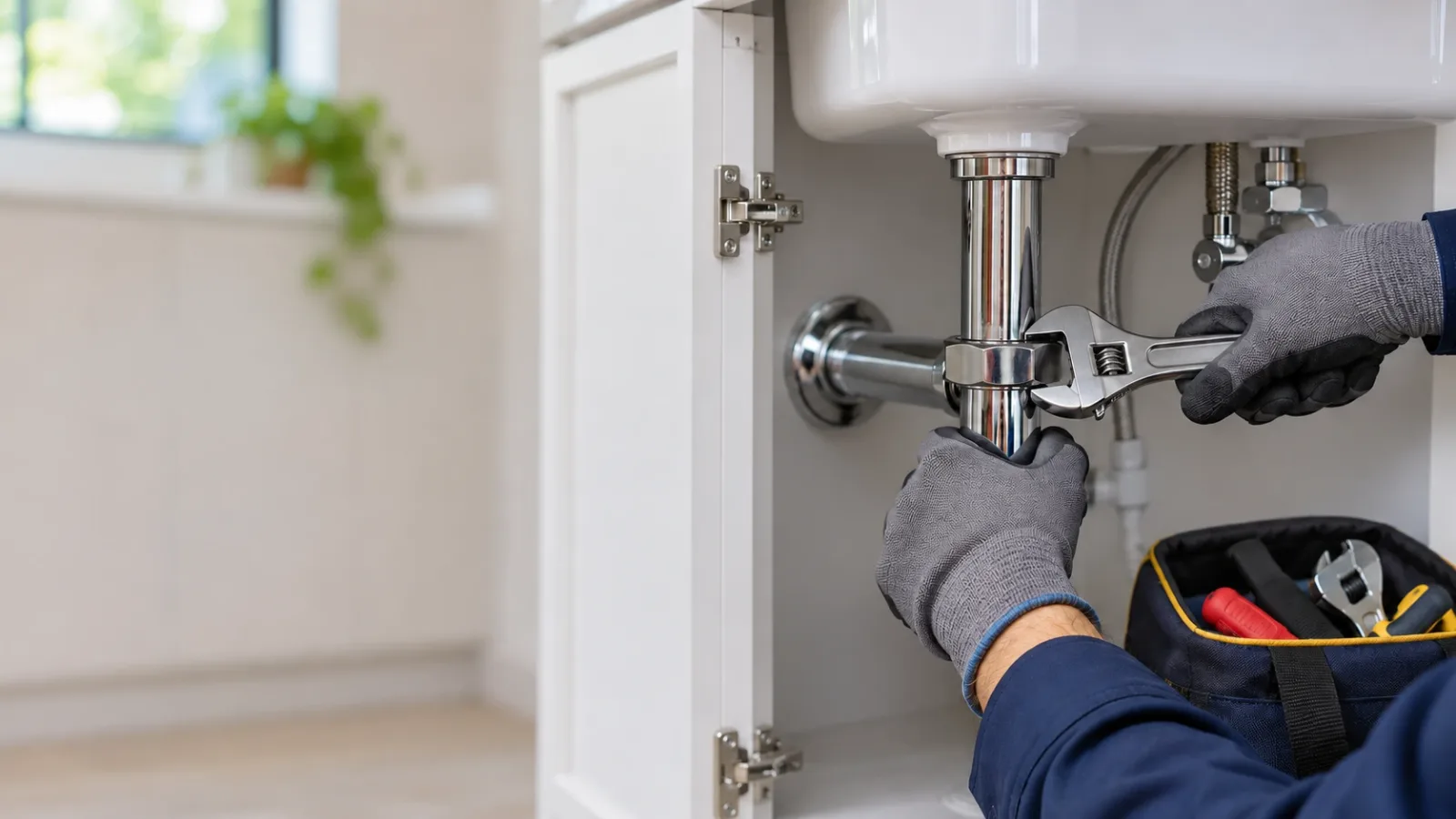
Open 24 hours · Serving Joplin, MO
Sewer Line Repair in Joplin, MO
Backups, roots and broken pipe found on camera, explained on screen, and repaired the way that suits your line.
- In business since 2024
- Local Joplin address
- Open 24 hours
- Quote before work starts
Quick answer
For sewer line repair in Joplin, MO, Plumber Joplin MO uses a camera inspection to find exactly what is wrong: roots, cracks, sagging or collapsed pipe. Then we explain your repair options honestly, including trenchless methods where your line suits them, and quote before any digging or lining starts. Call (844) 434-1552.
What are the signs of a broken sewer line?
The main signs are several drains backing up at once, sewage coming up through the lowest drain in the house, gurgling toilets, sewage odor indoors or outside, and soggy, unusually green or sunken patches in the yard along the sewer path. Repeated main-line clogs after cleaning are also a strong warning sign.
- Water or sewage backing up into a basement floor drain, shower or tub
- Toilets gurgling or bubbling when other fixtures drain
- Multiple slow drains on the lowest floor
- A sewage smell inside, around the cleanout or in the yard
- Wet, sunken or unusually lush patches of grass between the house and the street
- Main-line clogs that keep coming back after drain cleaning
- Pests such as rodents or insects near drains, which can enter through broken pipe
If sewage is coming into the house, stop using water anywhere in the home and call our 24 hour emergency line.
What causes sewer line damage?
Sewer lines are damaged by tree roots growing into joints, older pipe materials breaking down with age, ground movement that shifts or sags the line, grease and wipes building up, and damage from digging or heavy loads above the line. Often several of these causes work together over years.
Tree roots
Roots are drawn to the moisture and nutrients in a sewer line. They enter through small cracks or loose joints, then grow into a dense mass that catches waste.
Ageing pipe
Older homes may have sewer laterals made of clay tile, cast iron or older composite pipe. Clay joints separate. Cast iron corrodes and scales. Some older composite pipe can deform and collapse.
Ground movement and sagging
Soil settles and shifts. A section of pipe can sink and form a belly, where water and waste sit instead of flowing, leading to repeated clogs.
Grease, wipes and debris
Fats, oils and grease harden along the pipe. Wipes and paper products snag on them and on roots. The result is a blockage that slowly gets worse.
Physical damage
Digging for fences, utilities or landscaping can strike a line. Heavy vehicles over a shallow pipe can crack it.
Sewage backing up? Stop using water and call now.
Call (844) 434-1552Our sewer line repair process
- Relieve the backup. If the line is blocked, we clear it first so the house is usable again.
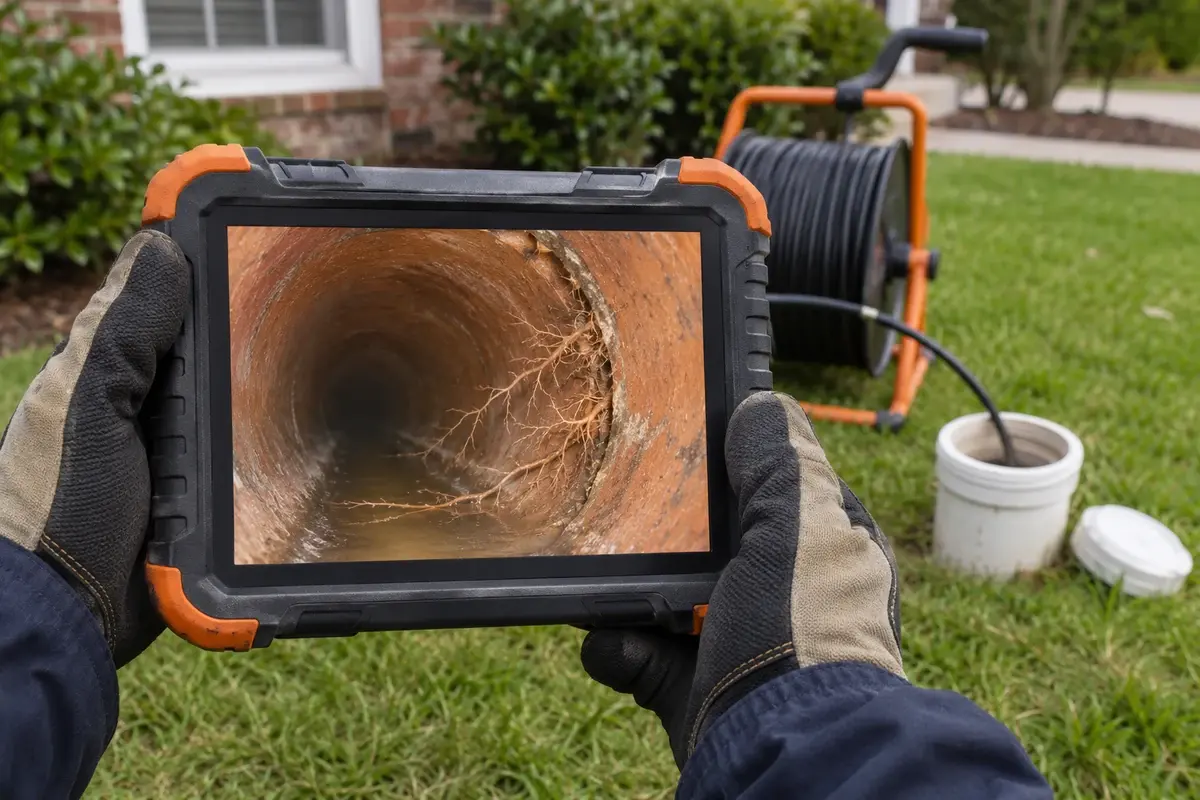
- Run a camera inspection. A waterproof camera goes through the cleanout and along the line. We record what we see and locate the problem spot and its depth.
- Show you the footage. You see what we see: roots, cracks, offsets, sags or collapse. We explain what each finding means.
- Lay out the options. Spot repair, trenchless lining or bursting, or excavation and replacement. We explain which suit your line and why, with a quote for each that fits.
- Complete the repair. The agreed work is carried out, with any permits or utility locates the job requires arranged as part of it.
- Verify with the camera. We run the camera again after the repair to confirm the line is sound and flowing.
Trenchless vs excavation: which sewer repair is right?
Trenchless repair rehabilitates or replaces the pipe through small access points, so there is much less digging of yards, driveways and landscaping. Excavation means digging down to the pipe and replacing it directly. Trenchless suits many lines but not all. Collapsed pipe, severe sags and some layouts still need excavation.
Trenchless sewer repair, explained honestly
There are two common trenchless approaches. Pipe lining (cured-in-place pipe) inserts a resin-coated liner into the existing pipe and cures it into a new, jointless pipe inside the old one. Pipe bursting pulls a new pipe through the old one, breaking the old pipe outward as it goes.
- Advantages: far less disruption to lawns, driveways, patios and trees; often a shorter job; seals out roots at the old joints.
- Limits: the line must be cleaned and passable; a liner slightly reduces the inside diameter; fully collapsed pipe, severe bellies and some connections are not suitable.
Excavation, explained honestly
Traditional repair digs a trench down to the damaged pipe so it can be cut out and replaced. For a short damaged section that is easy to reach, a targeted dig can be the simplest answer.
- Advantages: works for any type of damage, including collapse and sags; allows the pipe's slope to be corrected.
- Limits: more disruption, and surfaces above the line need restoring afterwards.
We will not recommend trenchless just because it sounds modern, or excavation just because it is familiar. The camera footage decides.
Should you repair or replace a sewer line?
Repair a section when the damage is limited to one spot and the rest of the line is in good shape on camera. Replace or line the whole run when damage appears in several places, the pipe material is failing along its length, or repeated spot repairs are adding up. The footage shows which applies.
A single root intrusion at one joint in otherwise sound pipe is a spot-repair job. Cracking, offsets and roots every few feet along an old clay line point to lining or replacing the whole lateral, because fixing one spot just moves the failure to the next one.
How to protect your sewer line
- Keep grease, wipes and paper towels out of drains and toilets.
- Think before planting. Avoid planting trees and large shrubs directly over the sewer path.
- Know where your cleanout is. It gives quick access when a line needs clearing.
- Call before you dig. Contact 811, the national call-before-you-dig line, before digging for fences or landscaping.
- Schedule maintenance if your line has known root problems and repair is not practical yet. See drain cleaning and hydro-jetting.
- Get a camera inspection before buying an older home, so you know the condition of the line first.
Sewer line repair FAQ
Who do I call for a sewer backup in Joplin?
Call a plumber first. Plumber Joplin MO is open 24 hours at (844) 434-1552. We find out whether the blockage is in your private sewer line or beyond it. If a camera inspection shows the problem is in the public sewer main, we tell you so you can report it to the city's sewer utility.
What part of the sewer line is the homeowner responsible for?
In most places, the homeowner is responsible for the private sewer lateral running from the house toward the public sewer main, and the city maintains the main itself. Exactly where responsibility changes varies, so check with the City of Joplin or your town if you are unsure. A camera inspection shows where the problem is.
What does a sewer camera inspection show?
A sewer camera shows the inside of your line on a screen: roots, cracks, broken or offset joints, sagging sections where water pools, grease build-up and collapsed pipe. It also locates the problem and its depth, so any repair can target the right spot instead of guessing where to dig.
Is trenchless sewer repair always possible?
No. Trenchless methods need a line that a liner can be pulled or inflated through, or a path a new pipe can be burst through. A fully collapsed pipe, a severe sag, or certain layouts and connections may still need excavation. We tell you which methods suit your line after the camera inspection.
Can tree roots in a sewer line be removed for good?
Cutting or jetting roots out clears the line, but roots grow back through the same cracks and joints. A lasting fix means sealing or replacing the damaged section, for example with a liner or new pipe. If repair is not practical yet, scheduled maintenance cleaning keeps the line flowing in the meantime.
Related drain and sewer services
Drain Cleaning
Slow sinks, clogged tubs and backed-up main lines cleared with the right tool for the clog.
Drain Cleaning in Joplin →Emergency Plumbing
Burst pipes, flooding, sewage backups and no water — answered 24 hours a day.
Emergency Plumber in Joplin →Leak Detection & Plumbing Repair
Hidden leaks, slab leaks, low water pressure and everyday pipe repairs.
Leak Detection & Repair in Joplin →Repiping & Gas Line Services
Whole-home and partial repiping, plus gas line repair and installation.
Repiping & Gas Lines in Joplin →See every service from our plumber in Joplin, MO, the areas we cover near Joplin, or book a sewer camera inspection.
Need sewer line repair in Joplin? Call now.
Tell us what is happening and where. We will explain the likely cause, the options, and the quote before any work starts. Open 24 hours, serving Joplin, Webb City, Carl Junction, Carthage, Duquesne and Oronogo.